


Parenting is a journey filled with wonder, joy, and moments that stretch your patience. As a parent who fell in love with the Montessori philosophy, I can tell you — bringing Montessori into your home doesn’t require perfection, fancy materials, or hours of preparation. It does require intention, respect for your child’s development, and a little creativity.
The Montessori Method isn’t just an educational system used in schools — it’s a way of life that supports independence, confidence, and curiosity in children right from infancy through childhood.
This blog is for you if you’re wondering how to apply Montessori at home, what practical life activities look like, or how to create an environment that nurtures learning and confidence.
What Is Montessori Parenting?
At its heart, Montessori parenting is about respect for your child as a capable, curious human. You watch, observe, and prepare a safe environment that lets your child explore, learn, and grow — with you alongside them as a guide rather than a director.
Dr. Maria Montessori, the visionary behind this approach, designed child‑sized environments that encourage freedom within limits, self‑directed learning, and genuine independence.
Why Montessori at Home Matters to Families

Many parents wonder:
- How can I support my child’s independence without chaos?
- Can Montessori reduce tantrums and power struggles?
- Is Montessori only for preschoolers?
The good news: Montessori at home fits everyday life, not just school‑style learning.
Here’s what families find when they adopt Montessori principles:
- Greater independence in daily tasks — kids pour their own water, choose activities, and help with chores.
• Deeper concentration and focus during play and learning.
• Empowerment and confidence as children do rather than wait to be told.
How to Apply Montessori at Home (Step‑by‑Step)

1. Create a Prepared Environment
The “prepared environment” is core to Montessori: spaces set up so children can access what they need independently.
At home, this can look like:
- Low shelves with toys and books organized neatly.
- Child‑sized cups, plates, and utensils.
- Accessible clothes so your child can dress themselves.
- Work spaces that are calm and distraction‑free.
This environment helps children choose, explore, and learn — all on their own terms.
2. Embrace Practical Life Activities
“Practical life” is Montessori speak for real‑world tasks that build coordination, independence, and self‑confidence.
Examples to try today:
- Letting your child pour water into a glass.
- Folding laundry or setting the table.
- Sweeping with a child‑sized broom or wiping the table after meals.
These may seem simple, but they’re powerful learning experiences that teach responsibility and pride in contribution.
3. Choose Purposeful, Open‑Ended Toys
Montessori materials don’t need to be expensive. The goal isn’t flashy toys — it’s engaging, meaningful play.
Look for:
- Wooden blocks
- Sorting and stacking activities
- Sensory materials like clay or sand
Avoid overly stimulating toys that flash or make automatic sounds — they rarely build deeper focus.
4. Foster Order and Routine
Children feel safe when they understand patterns. Montessori parenting often includes consistent rhythms in daily life — like morning rituals, snack time, and familiar play cycles.
When everything has a place, children know how to care for their environment and themselves.
5. Observe More, Direct Less
Montessori parenting is built on observation. Before stepping in, watch:
- What grabs your child’s attention?
- How long can they focus?
- What challenges are they ready to explore?
Your role is guide, not taskmaster — and sometimes just stepping back gives your child the space to surprise you.
Montessori at Every Age
Montessori principles apply from babyhood through school years.
Infants benefit from a safe space to explore and choose activities. Toddlers thrive when given freedom to dress themselves or help with simple tasks. Older children can manage more complex chores and decision‑making.
No matter the age, respect and independence are timeless principles.
What the Montessori Home Looks Like
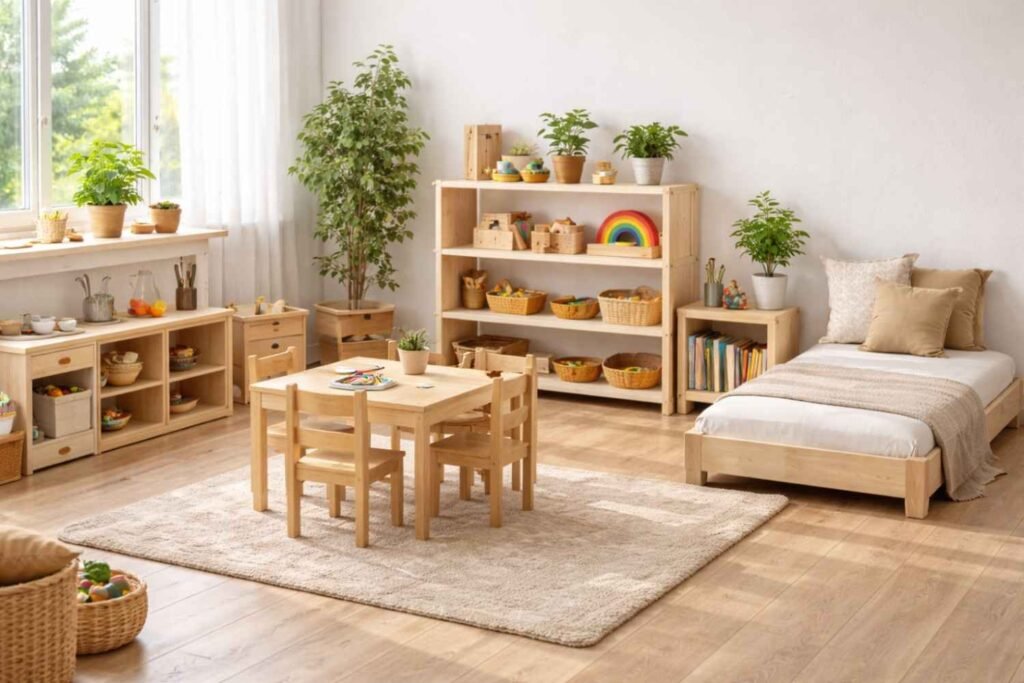
Here are practical ways to set up rooms:
Kitchen:
Child‑accessible cups, snacks, and tools invite them to help.
Bedroom:
Low clothing rods and floor beds empower self‑care.
Living Room:
A dedicated learning corner with baskets of organized materials.
These small changes can transform everyday spaces into learning places.
Montessori Weekly Activity Plan for Different Ages
Here’s a weekly activity plan to help integrate Montessori principles into your home routine. The activities are divided by age groups, allowing for appropriate learning and engagement.
| Day | Infants (0-2) | Toddlers (2-4) | Preschoolers (4-6) |
| Monday | Sensory play with soft toys or cloth books. | Pouring practice with water or rice. | Sorting shapes and colors with wooden blocks. |
| Tuesday | Tummy time with safe exploration of textures. | Setting the table for meals (helping with napkins). | Tracing simple letters with crayons or pencils. |
| Wednesday | Looking at pictures of family members. | Sweeping with a small broom. | Practicing dressing with buttons/zippers. |
| Thursday | Reaching and grabbing for small objects. | Washing hands independently (with step‑stool). | Reading aloud and asking questions about the story. |
| Friday | Hand‑eye coordination with stacking blocks. | Sorting clothes by color for laundry. | Setting up a small gardening activity (planting seeds). |
| Saturday | Peek‑a‑boo with toys. | Watering plants or helping with grocery bags. | Cooking simple snacks with supervision (mixing ingredients). |
| Sunday | Singing songs and clapping. | Helping with cleaning after playtime. | Creating simple art using scissors and glue. |
This weekly plan can be adapted depending on your child’s preferences and developmental stages. The key is fostering independence, responsibility, and a sense of pride in their achievements.
Frequently Asked Questions (FAQs)
1. Can Montessori really work without Montessori school?
Yes! While schools are valuable, Montessori is a philosophy you can apply in your home environment too.
2. Do I need special materials?
No. Start with everyday objects — utensils, natural toys, baskets, and trays. Montessori is efficient not expensive.
3. What if my child struggles to focus?
Montessori environments reduce distractions and allow children to choose activities based on interest — naturally increasing focus over time.
4. How do I involve siblings?
Choose tasks suitable for each age and let older siblings model behaviors — collaboration builds social skills.
5. When will I see results?
You may notice small changes quickly — like your child dressing themselves or more joy in learning — but Montessori is a long‑term philosophy, not a quick fix.
Final Thoughts: Montessori Is a Gift, Not a Race
It’s easy to feel overwhelmed when you first hear about Montessori parenting. But remember — it’s not about perfection. It’s about creating a home where your child feels respected, capable, and excited to explore.
Instead of asking “am I doing it right?” — ask “how can I help my child do this themselves?” That shift alone opens the door to confident learners, meaningful connections, and a calmer home life.
Every time your child pours water, folds a towel, or chooses their own work — you’re doing Montessori.
And they’re learning in ways that matter.
