
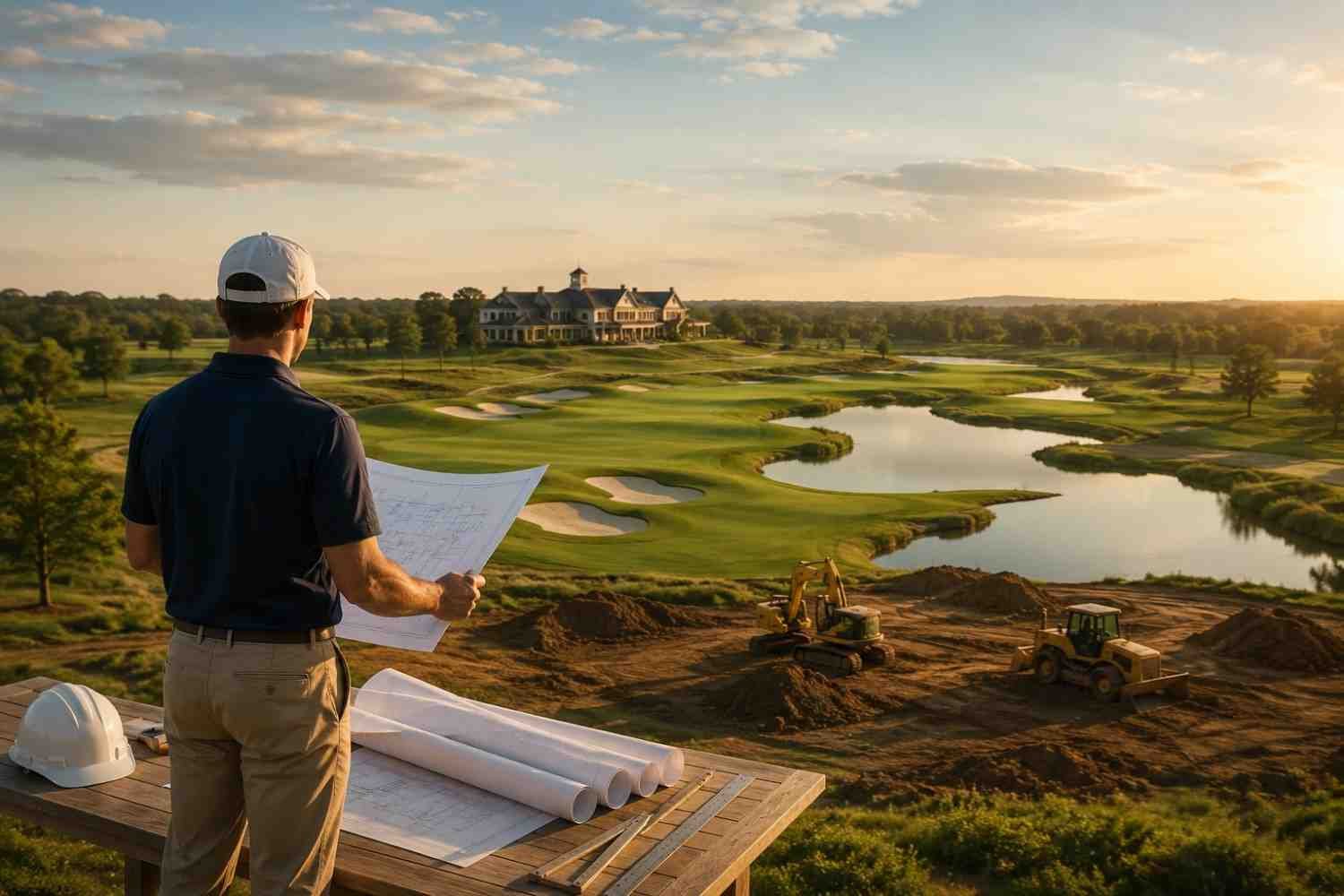
The birth of a golf course is a complex convergence of landscape architecture, civil engineering, and environmental stewardship. While the public sees a finished product of rolling greens and pristine fairways, the reality of development begins deep beneath the surface. Opening a successful course requires a meticulous transition from the initial foundations to the final blade of grass, ensuring that the site is both playable for golfers and sustainable for the environment.
Establishing the Physical Foundation
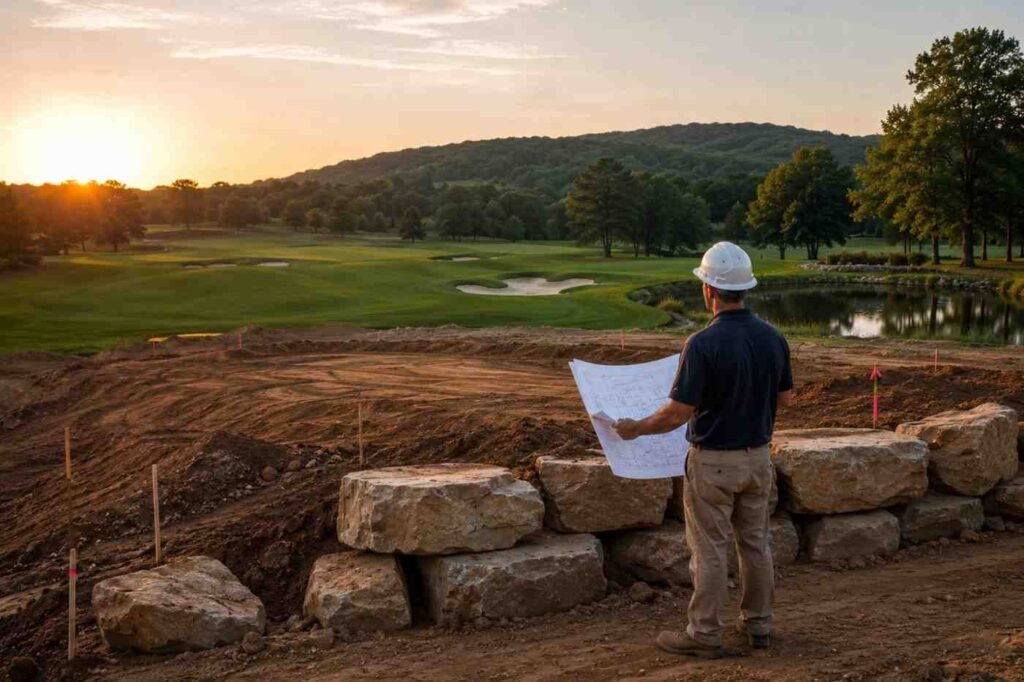
Every world-class course begins with the soil. Before a single seed is planted, developers must perform a comprehensive evaluation of the physical layout, including soil type, slope, and natural drainage patterns. Healthy turf is the foundation of any great course, but that health is dictated by the quality of the sub-base.
During the grading and shaping phase, engineers must balance the aesthetic vision of the course architect with the practical needs of site stability. This involves moving massive amounts of earth to create the hazards, bunkers, and elevation changes that define the game. However, this level of land disturbance introduces significant risks. To mitigate these, developers must implement robust stormwater pollution prevention plans (SWPPP) to ensure that sediment and runoff do not compromise local waterways or violate environmental regulations.
Navigating Environmental Compliance
Construction at this scale is heavily regulated. A critical part of the pre-construction phase involves securing permits and ensuring that all earth-moving activities align with federal and state mandates. For developers in the Intermountain West, implementing professional erosion control in Utah is a non-negotiable step to manage the unique challenges posed by steep slopes and high-intensity rainfall patterns.
Effective compliance strategies during the “foundations” phase include:
- Silt Fences and Barriers: Temporary measures to filter sediment from sheet flow.
- Erosion Control Blankets: Used on steep embankments to anchor topsoil until vegetation is established.
- Sediment Basins: Detention ponds designed to trap runoff and protect the surrounding ecosystem.
By prioritizing these environmental safeguards early, course owners avoid the costly structural failures and regulatory fines that can derail a project before the grand opening. Just as careful planning helps preserve the integrity of a golf course, thoughtful design choices can also influence how to display your favorite experiences throughout clubhouses, visitor centers, or other spaces that celebrate the course’s history and milestones.
Precision Engineering: Irrigation and Drainage
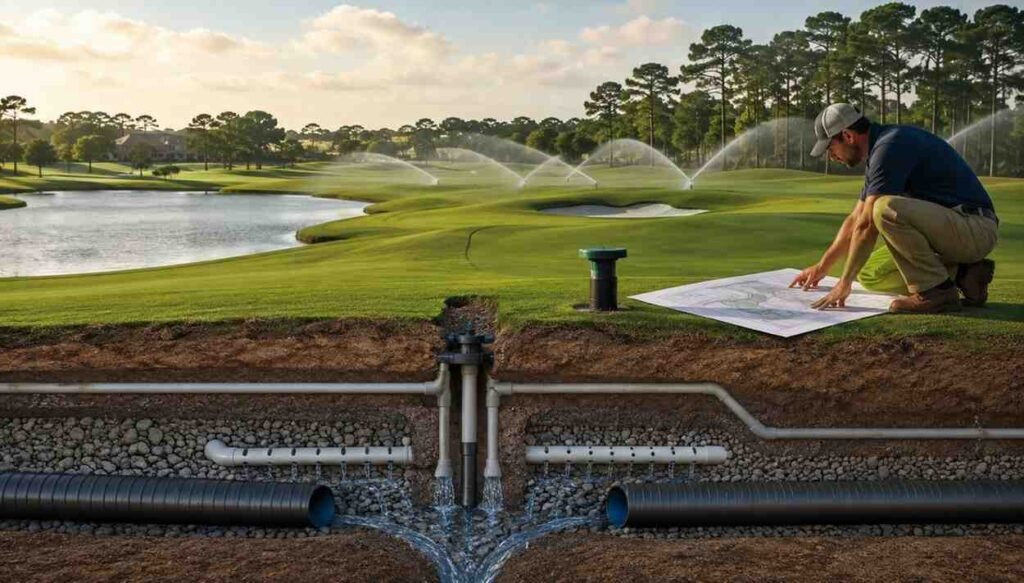
Water management is arguably the most challenging technical aspect of golf course development. A course that is too wet becomes unplayable and prone to disease, while a course that is too dry loses its aesthetic and structural integrity.
Modern courses utilize smart irrigation systems equipped with soil moisture sensors and weather data integration to deliver precise amounts of water where it is needed most. Sustainable practices, such as water recycling and the use of reclaimed water, are increasingly standard, particularly in drought-prone regions. Furthermore, infrastructure like French drains and swales must be integrated into the design to direct water away from vulnerable playing areas and toward safe discharge points.
The Art of Turf Selection and Care
Once the foundation and infrastructure are secure, the focus shifts to horticulture. Turf selection is a high-stakes decision influenced by the local climate and anticipated foot traffic. Superintendents often choose between Bermuda grass for warmer climates or Bentgrass for cooler regions to ensure the greens remain vibrant and resilient.
Establishing the greens requires:
- Aeration and Soil Prep: Punching holes in the soil to allow oxygen and nutrients to reach deep roots.
- Strategic Fertilization: Using balanced programs (Nitrogen, Phosphorus, and Potassium) to promote thick, healthy growth.
- Integrated Pest Management (IPM): Monitoring for grubs, fungi, and weeds to intervene early with minimal chemical use.
Preparing for the First Tee

As the course approaches its opening date, the focus turns to operational excellence. This includes training a skilled grounds crew and investing in precision equipment, such as GPS-guided mowers, to maintain the uniform heights required for greens and fairways.
Opening a golf course is more than just a business venture; it is the creation of a living landscape. By focusing on the science of the foundation as much as the beauty of the fairway, developers can ensure their course stands strong against the test of time and provides a flawless experience for every golfer who steps onto the first tee.