
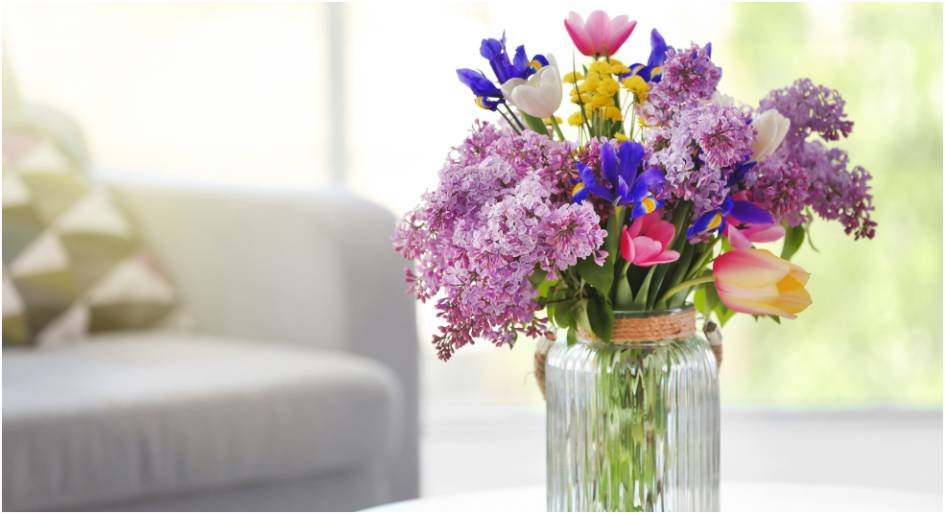
One vase of peonies on your kitchen counter does more for your home’s atmosphere than a $400 throw pillow. That’s not opinion dressed up as fact. Behavioral research conducted at Harvard and Rutgers found that flowers can induce immediate feelings of happiness, promote long-term mood-boosting effects, and reduce feelings of anxiety and agitation. Your sofa cannot do that.
The problem most people run into isn’t motivation. It’s not knowing where to start, which blooms suit which rooms, or how to make a simple bouquet look intentional rather than accidental. This guide fixes all three. You’ll get a room-by-room placement strategy, the 2025 trends that are actually worth following, a vase-to-bloom pairing table, and one framework I’ve started calling the Three-Point Bloom Rule that makes any home feel designed rather than decorated.
Why Fresh Flowers Beat Every Other Decor Purchase
Interior designers will sell you on art prints, sculptural vases, and curated coffee table books. All fine. But none of them change how you feel within thirty seconds of walking through the door.
A study cited by the Society of American Florists found that people were more likely to feel happier and have more enthusiasm and energy at work when flowers were present in their home environments the morning before. The carry-over lasted into the workday. That’s an ROI a decorative bowl of river stones simply cannot match.
The mood case is well established. But the design case is just as strong. Flowers are the only decor element that changes every single week. Your gallery wall looks the same in March as it does in October. A rotation of ranunculus in spring, dahlias in late summer, and dried protea in winter means your home never feels static.
According to Living Etc.’s 2025 floral trend report, flowers are becoming increasingly intertwined with interior design trends, and finding the right bloom that speaks to your personality is the real secret to curating a space that feels like yours. That’s the practical truth most decor guides skip past.
The Three-Point Bloom Rule (An Original Framework)
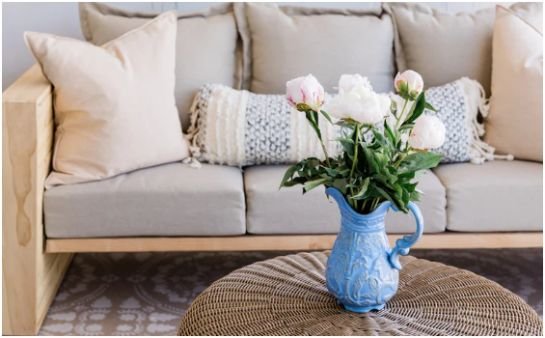
Here’s the framework. Place fresh flowers at exactly three heights across any given room: low (table surface, roughly 28 to 32 inches), mid (console, sideboard, or shelf at 36 to 48 inches), and high (mantle, top-of-bookcase, or countertop above eye line at 54 to 72 inches). You don’t need three separate arrangements. Two works. But the three heights need to be accounted for by something, whether that’s a bloom, a potted plant, or a dried branch installation.
Why it works: the human eye naturally scans a room from entry point to focal point in a Z-pattern. Hitting all three vertical zones anchors attention at every stop on that path. It’s why a single centerpiece on a dining table still feels incomplete when the sideboard behind it is bare. You’re only serving one height out of three.
Try it in your living room first. One low bud vase on the coffee table, one medium arrangement on a side table or console, one tall dried pampas or eucalyptus stem in a floor vase near the window. The room will read as “designed” to anyone walking in, even if nothing else changed.
Placing fresh flowers everyday is the best practice of building a supportive routine for long-term mental wellness and calming atmosphere.
Room by Room: Where to Place Fresh Flowers
The Entryway
Interior designer Melanie Lissack notes that placing flowers on a hallway console table makes your home instantly inviting, echoing how high-end hotels always feature fresh blooms at check-in. There’s a reason that comparison resonates. Your entryway is a first impression and a last impression. It’s what guests remember and what you see on your way out every morning.
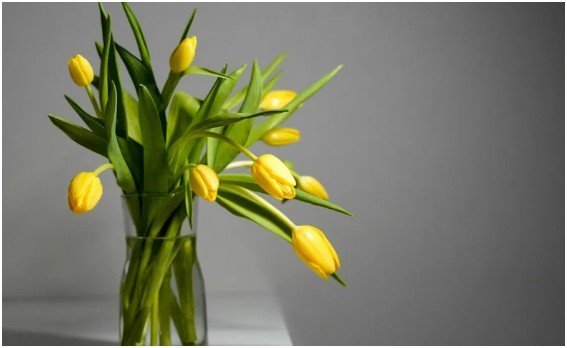
Go tall here. Tulips, cherry blossom branches, or long-stem sunflowers in a statement vase work better than low arrangements because the entry typically has limited horizontal surface area. A single dramatic stem in a narrow ceramic vessel beats a sprawling bouquet crammed into a tiny console.
The Living Room
This is your canvas. The living room can hold the most variety because it has the most surfaces. Coffee table, console, mantle, bookcase. Work the Three-Point Rule here in full. For 2025, floral sculptures and 3D botanical art are gaining ground alongside traditional cut flowers, so a dried floral wall installation above the sofa doubles as art and decor simultaneously.
For cut flowers on the coffee table, keep it lower than you think. Anything over 14 inches starts to interrupt sightlines across the seating area. Peonies, anemones, and hydrangeas are my picks here. They’re full enough to read at a distance but not so sculptural they demand attention.
The Kitchen
Most people skip the kitchen. That’s a mistake. You spend more time in your kitchen than in your formal living room, and a small bud vase next to the coffee maker guarantees you see it every single morning. Harvard and Massachusetts General Hospital research confirms that people report being happier and more energetic after looking at flowers first thing in the morning, directly countering the “morning blahs” effect.
Keep it small. A single stem of freesia or two garden roses in a short bottle vase works better than a full arrangement that competes with the practical business of cooking. Herbs with flowers, like flowering rosemary or lavender, bridge the gap between functional and beautiful.
The Bedroom
Contrary to old advice about avoiding strongly scented flowers in the bedroom, the research suggests gentle floral fragrance is actually calming, not disruptive. Lavender and soft roses near the nightstand are fair game. Avoid highly fragrant lilies if you’re a light sleeper, but for most people, a small arrangement on the dresser or a single stem on the nightstand adds intimacy to the room without overwhelming it.
The Bathroom
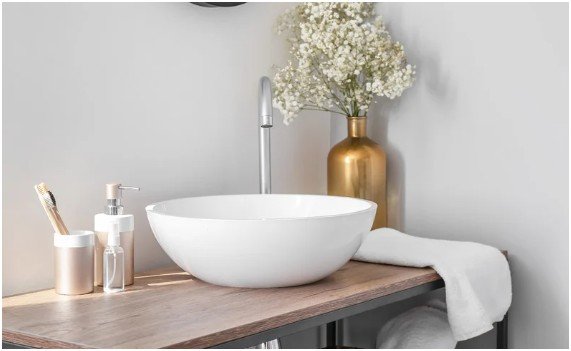
Put flowers in your bathroom. One bud vase, one bloom, counter edge next to the sink. That’s it. It takes 90 seconds to set up and transforms a purely utilitarian space into something that feels considered. Humidity actually extends the life of certain flowers, so orchids and anthuriums thrive in bathrooms far longer than they would on a sunny windowsill.
2025 Bloom Trends Worth Following
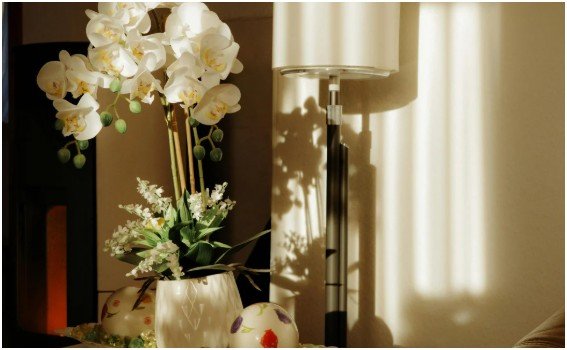
Not every trend deserves space in your home, but a few of this year’s directions are genuinely useful for everyday decorating rather than just editorial photoshoots.
The wild, imperfect look is in. Cissy Bullock of The School of Sustainable Floristry told Living Etc. that decorating with flowers in 2025 is about “a wild, freshly picked look that feels effortless and imperfect.” That’s permission to stop obsessing over symmetry. Loose arrangements with varying stem lengths and some foliage spilling over the vase edge look more current than tight, formal bouquets.
Vessels as art pieces. Handcrafted ceramics, repurposed antiques, and minimalist stoneware are replacing standard glass cylinders. The vase matters as much as the bloom in 2025. Rich glazes in deep purple, bold green, and ochre are the specific colors Accent Decor’s VP of Design, Natasha Pantelides, called out as the palette shaping interiors this year.
Flowers everywhere, not just on the dining table. Shelf styling, bathroom counters, entryways, even the kitchen windowsill. As floral stylist publication AT observed in April 2025, flowers are becoming an everyday part of home styling rather than something reserved for guests or holidays. That mindset shift is the whole point.
Subscription-style rotation. Some homeowners are rotating monthly themes, forest-inspired one month, coastal the next, rather than buying one-off bouquets. This approach keeps things intentional and prevents the default “whatever the grocery store had” look.
Vase and Bloom Pairing Guide
| Bloom | Best Vase Type | Ideal Room | Typical Vase Life
|
|---|---|---|---|
| Peony | Wide-mouth ceramic | Living room, bedroom | 5 to 7 days |
| Tulip | Tall glass cylinder | Entryway, kitchen | 7 to 10 days |
| Garden rose | Antique ceramic or ribbed stoneware | Bedroom, living room | 6 to 8 days |
| Sunflower | Tall earthenware or rustic pottery | Kitchen, entryway | 10 to 12 days |
| Orchid stem | Narrow bud vase or bamboo holder | Bathroom, bedroom | 14 to 21 days |
| Dried pampas | Floor vase or oversized urn | Living room corner | Indefinite |
| Ranunculus | Low bowl or squat ceramic | Coffee table, desk | 7 to 10 days |
Source: Vase life figures aggregated from florist industry guidelines and interior design styling resources updated in 2025. Always trim stems at a 45-degree angle and change water every two days to reach the higher end of the range.
A Practical Checklist: Setting Up Your First Bloom Rotation
If you’ve never kept fresh flowers at home consistently, start here. The failure mode is almost always buying too much at once, watching it die, and writing the whole habit off. This checklist avoids that.
- Pick one room to start. The kitchen or the entryway, because you pass through them every day.
- Buy one bunch of one type of flower, not a mixed bouquet. Tulips, sunflowers, or garden roses. Easier to style, easier to replace on the same schedule.
- Get one vase that you love. Not a leftover mason jar, an actual piece you’d leave on the counter empty. It changes how often you refill it.
- Set a weekly calendar reminder to buy new stems. Wednesday works well because most florists and grocery floral sections are freshly stocked mid-week.
- Once the single-room habit sticks, add the Three-Point Rule to your living room.
- After two months, consider a monthly subscription so you stop defaulting to whatever’s available. Services offering flower delivery straight from farm to door cut out several days of warehouse storage, meaning you start with blooms that actually last the full vase life.
The Scenario: A Sunday Morning Reset
Here’s how this plays out in a real home. It’s Sunday at 10am. You’re doing a quick clean before friends come over at 3. The apartment looks fine but feels flat. You spend 12 minutes at the farmers market and spend $18 on one bunch of ranunculus and a few eucalyptus stems.
Back home, you split them: low arrangement on the coffee table using four ranunculus in a wide squat ceramic, three eucalyptus stems in the entryway in a tall narrow vase. That’s it. Two moves, under $20, and the apartment reads as curated to everyone who walks in. Your guests will comment on the flowers before they comment on anything else. They always do.
That scenario is repeatable every single week. It doesn’t require design training or a big budget. It just requires knowing which rooms, which heights, and which blooms.
“As a psychologist, I’m particularly intrigued to find that people who live with flowers report fewer episodes of anxiety and depressed feelings. Our results suggest that flowers have a positive impact on our well being.”
That’s Dr. Nancy Etcoff of Harvard Medical School, speaking about the Home Ecology of Flowers study published by the Society of American Florists. The research tracked participants over a sustained period and found the effects weren’t just immediate but carried forward into daily mood and work energy. Decor rarely earns that kind of citation.
Seasonal Rhythm: Rotating Your Blooms Through the Year
The homes that look consistently good with flowers aren’t the ones with the biggest budgets. They’re the ones with a seasonal rhythm. Here’s a simple framework by quarter.
January through March: Tulips, hyacinths, white narcissus, forced cherry blossom branches. Light colors, early-spring energy. Your home needs it most after winter.
April through June: Peonies, garden roses, ranunculus, lilac stems. This is peak season for these blooms and costs drop at most suppliers. Buy more freely.
July through September: Sunflowers, dahlias, zinnias, marigolds. High saturation color that pairs well with the natural light coming through summer windows.
October through December: Dried arrangements, protea, cotton stems, amaryllis for December. Texture over freshness. Dried pampas and preserved eucalyptus carry rooms through the months when sourcing fresh blooms costs more and variety narrows.
The seasonal calendar also gives you a built-in reason to refresh the whole aesthetic of your home four times a year without touching furniture, paint, or any major decor purchase. It’s the lightest possible reset with the highest visible impact. You can grow your own flowers in your backyard by using seasonal planting guide and decorate your house with fresh flowers in budget.
One Final Thought Before You Go
Fresh flowers are not a luxury habit. They’re the cheapest per-hour form of intentional home design available. A $15 bunch of tulips lasts nine days. That’s $1.67 a day for a home that looks and feels actively cared for. The alternative, leaving rooms as they are and wondering why they feel incomplete, costs nothing up front and considerably more in how the space makes you feel every single day.
Start with one vase. Work the Three-Point Rule once you’re ready. Let the seasons guide what’s in the vase. The rest follows on its own.