
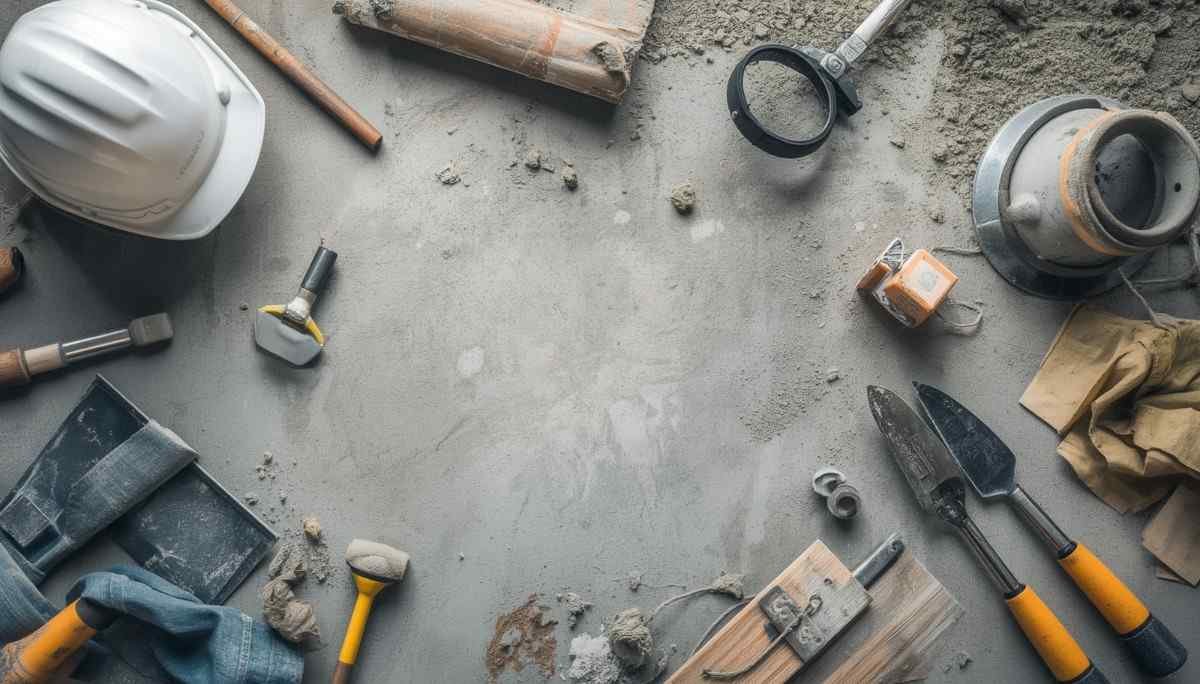
Construction projects involving concrete require specific equipment to ensure the material is mixed, poured, and finished correctly. The use of appropriate concreting tools not only enhances efficiency but also guarantees a high-quality and durable result. This article outlines the essential concreting tools necessary for successful and efficient construction processes.
Understanding the Importance of Concreting Tools
Concrete is a versatile building material, but working with it demands precision and proper handling tools. Using the right tools simplifies a wide range of tasks, including mixing, spreading, levelling, and finishing. These tools reduce labour time and minimise errors, resulting in better structural integrity and aesthetic appeal of the finished concrete.
Basic Hand Tools Required for Concreting
To secure your dream home‘s making the most fundamental concreting tools include shovels, wheelbarrows, and trowels. Shovels are used to transport and mix concrete ingredients, while wheelbarrows facilitate moving concrete around the site efficiently. Trowels enable the smoothing and finishing of concrete surfaces, ensuring an even texture.
Shovels and Mixing Tools
Shovels with durable steel blades and comfortable handles are essential for manual mixing of concrete, especially for small-scale projects. Mixing tools, such as mixing hoes, help combine cement, sand, gravel, and water to produce a consistent concrete mixture.
Wheelbarrows for Transport
Wheelbarrows are indispensable on construction sites for transporting freshly mixed concrete quickly to the desired location. Choosing a sturdy wheelbarrow with a strong wheel and easy steering capability enhances site productivity.
Trowels for Finishing
Trowels come in various shapes and sizes, each serving a specific purpose. Finishing trowels are used to create a smooth surface on the concrete, while edging trowels produce clean edges and grooves for expansion joints.
Leveling and Screeding Tools
After pouring, concrete must be levelled and flattened to the desired surface elevation. Screeding ensures the concrete surface is even before it starts to set.
Screed Boards
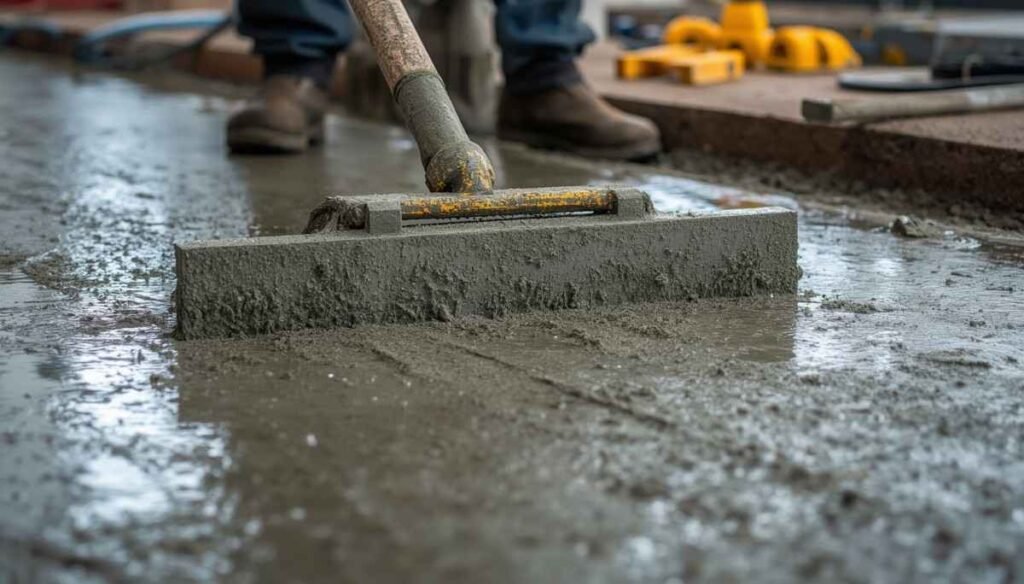
Screed boards, typically made from aluminium or timber, are dragged across the surface to level the concrete. Using a screed board correctly avoids air pockets and excess concrete build-up, improving structural quality.
Concrete Rakes
Concrete rakes help distribute concrete and work it into form corners and edges. They are also used early in the screeding process to pull excess concrete towards low spots.
Power Tools for Larger Concrete Projects
For extensive concreting work, power tools provide increased efficiency and precision.
Concrete Mixers
Concrete mixers automate the mixing process, ensuring a consistent blend of materials. They are available in different sizes, from portable mixers suitable for small projects to large stationary mixers for extensive construction.
Power Trowels
Power trowels are motorised machines used to finish concrete surfaces quickly on large slabs. They provide a smooth, durable finish compared to manual trowelling, reducing labour hours significantly.
Vibrators for Compaction
Concrete vibrators remove air bubbles and compact the concrete, preventing voids and weaknesses within the slab. Using vibrators correctly is crucial to achieving the desired concrete strength and surface quality.
Concrete Cutting and Drilling Tools
After curing, concrete often requires cutting or drilling for installations or adjustments.
Concrete Saws
Concrete saws, also known as cut-off saws or road saws, are used to cut expansion joints or remove sections of hardened concrete. Diamond blades are the preferred choice due to their effectiveness and durability.
Hammer Drills and Core Drills
Hammer drills and core drills are essential for drilling into concrete for anchors, pipes, or wiring. They allow precise cutting and hole-making without damaging the surrounding slab.
Safety Equipment for Concreting
Working with concrete involves exposure to dust, chemicals, and heavy materials. Therefore, safety equipment is crucial to protect workers.
Protective Gear
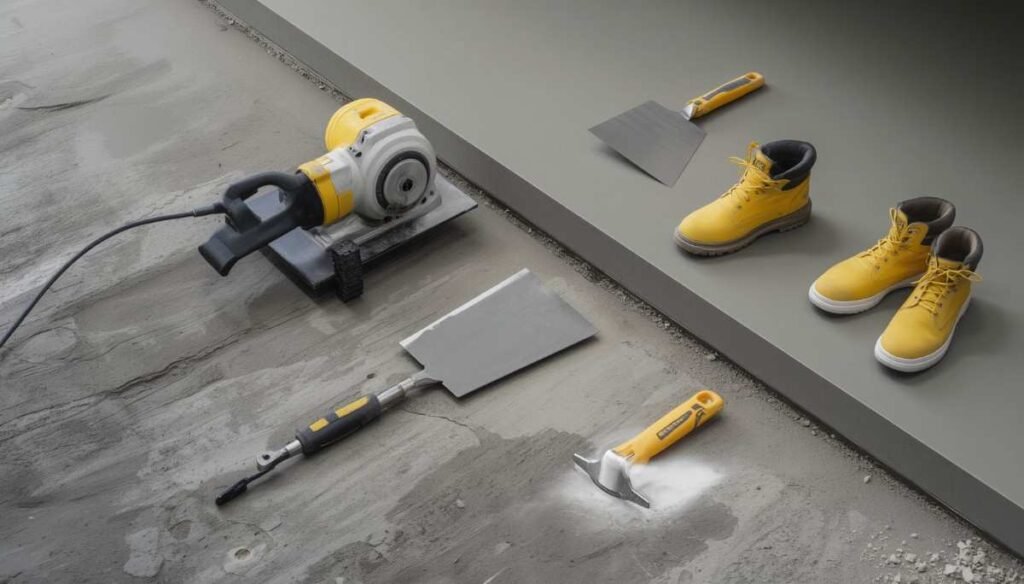
Essential safety gear includes gloves resistant to concrete burns, eye protection to guard against dust and debris, and respiratory masks to prevent inhalation of fine particles.
Footwear
Waterproof boots with good traction help prevent slips and protect feet from wet concrete and sharp objects.
Additional Tools for Efficient Finishing
Beyond the basic tools, certain items enhance the finishing quality of concrete surfaces.
Floats
Floats are used after screeding to further smooth the surface and bring out fine aggregate for a better finish. Magnesium floats are common for exterior flatwork.
Bull Floats
Bull floats cover large areas quickly and level ridges left by screeding. Using a bull float soon after pouring prevents surface cracks and unevenness.
Specialised Tools for Specific Applications
Different concreting tasks may require specialised tools, such as stamp mats for creating textured surfaces or edging tools for decorative concrete.
Where to Source Quality Concreting Tools
For purchasing reliable and efficient tools, professional suppliers provide a range of concreting tools designed for various construction requirements. These suppliers offer high-quality equipment that meets industry standards, contributing significantly to project success.
Maintaining Concreting Tools
Proper maintenance of concreting tools ensures longevity and optimal performance when building a house. Cleaning tools promptly after use to remove wet concrete, lubricating moving parts, and storing them in dry conditions are essential practices.
Conclusion
Efficient concreting relies heavily on having the right tools for each stage of the process—from mixing and pouring to finishing and cutting. Investing in quality concreting tools improves the speed, safety, and quality of construction work. Whether working on a small project or a large-scale construction site, utilising the appropriate equipment is indispensable for achieving durable and professional concrete structures.