
The secret to a bountiful harvest of crisp apples, sweet peaches, or juicy pears often lies hidden in the maintenance of the tree structure. While planting and watering are foundational, pruning is the specific activity that dictates whether a tree will thrive or simply survive. Many people are hesitant to cut into their trees, fearing they might do damage, but fruit trees actually require regular intervention to produce at their highest potential.
When done correctly, removing branches is not an act of destruction, but an act of creation that channels the plant’s energy into fruit production rather than excessive wood growth.
The Importance of Sunlight and Airflow
At the core of orchard management is the simple principle of light penetration. Fruit trees need significant solar energy to ripen their crop and develop the sugar content that makes fresh fruit delicious. When a canopy becomes too dense, the interior limbs are shaded out. These shaded areas become unproductive, eventually dying back as the tree shifts its resources to the outer edges.
Furthermore, proper airflow is vital for disease prevention. Fungal infections, which are common in many orchard environments, thrive in stagnant, humid air pockets trapped within a tangled mass of branches. By pruning, you open the center of the tree, allowing breezes to pass through, which dries out foliage and fruit quickly after rain, reducing the risk of rot and fungus.
Understanding the Dormant Season
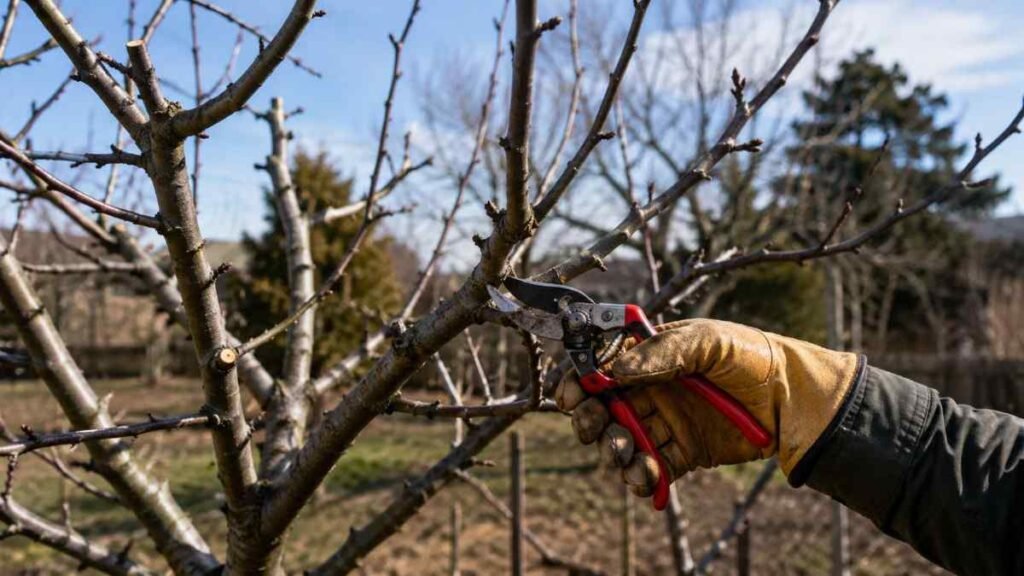
The best time to prune most fruit trees is during the dormant season, which falls in late winter or early spring before the buds begin to swell. During this time, the tree is inactive, meaning the stress of pruning is minimal.
Because the leaves have fallen, you have a clear view of the structural arrangement of the branches. This visibility makes it much easier to decide which limbs need to be removed to maintain the tree’s health and shape.
Try to avoid pruning in late autumn. If you cut the tree when the weather is still turning cold but before true dormancy, the healing process is slower, and the open wounds can be susceptible to freezing damage.
Also, avoid heavy pruning in the middle of summer. Removing a large portion of the canopy during the growing season can shock the tree and force it to produce a flush of succulent, unproductive growth that will not harden off before winter.
Essential Equipment for the Task
You do not need a massive collection of expensive gear, but you do need tools that are high quality and kept sharp. Dull blades are a common culprit in garden damage because they crush or tear the wood instead of slicing through it. This creates jagged wounds that take much longer to heal and serve as entry points for disease.
You should have three main tools on hand:
- Handheld bypass pruners for smaller twigs and stems.
- Long-handled loppers for branches up to an inch and a half in diameter, which provide extra leverage.
- A sturdy pruning saw for larger, structural limbs.
Always clean your tools between trees. If you have been working on a tree that shows signs of illness. Wiping your blades down with an alcohol solution will prevent you from accidentally transferring pathogens to healthy specimens.
Removing the Problematic Wood
Your first pass through any tree should be focused on the three Ds: dead, diseased, and damaged branches. These should be removed regardless of their size or where they are located. They serve no purpose to the tree and can harbor insects and fungal spores. Removing them immediately cleans up the health profile of your plant.
Beyond the three Ds, look for suckers and watersprouts. Suckers are the vigorous shoots that grow from the base of the trunk or directly from the roots. They steal nutrients that the tree should be using to build fruit. Watersprouts are the vertical, whip-like branches that grow straight up from the main scaffold limbs.
While they look healthy, they are structurally weak and almost never produce fruit. They are simply energy sinks that crowd the canopy and block light, so they should be cut back to the limb from which they originated. Regular pruning also helps get rid of bees.
Shaping for Future Success
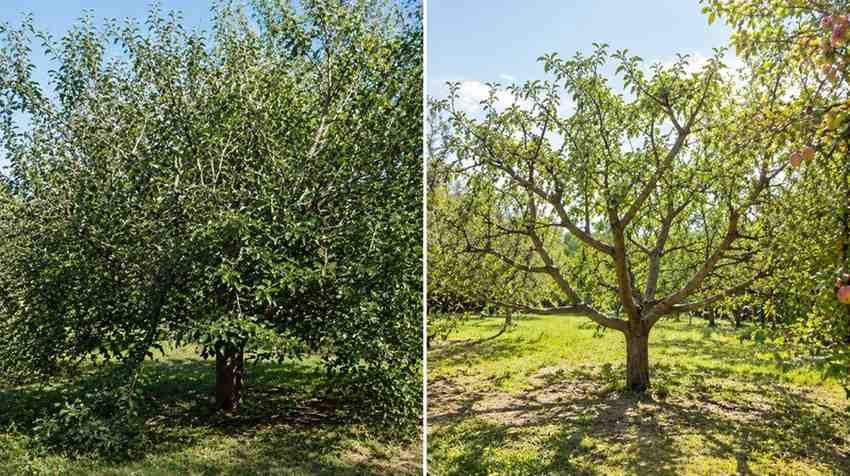
Most fruit trees are managed using one of two primary shapes: the open center or the central leader. The open center, often called a vase shape, is common for stone fruits like peaches. This involves removing the central trunk to create a bowl-like form, allowing light to reach the entire interior. Apples and pears are often trained with a central leader, which maintains one strong vertical trunk with lateral branches extending horizontally.
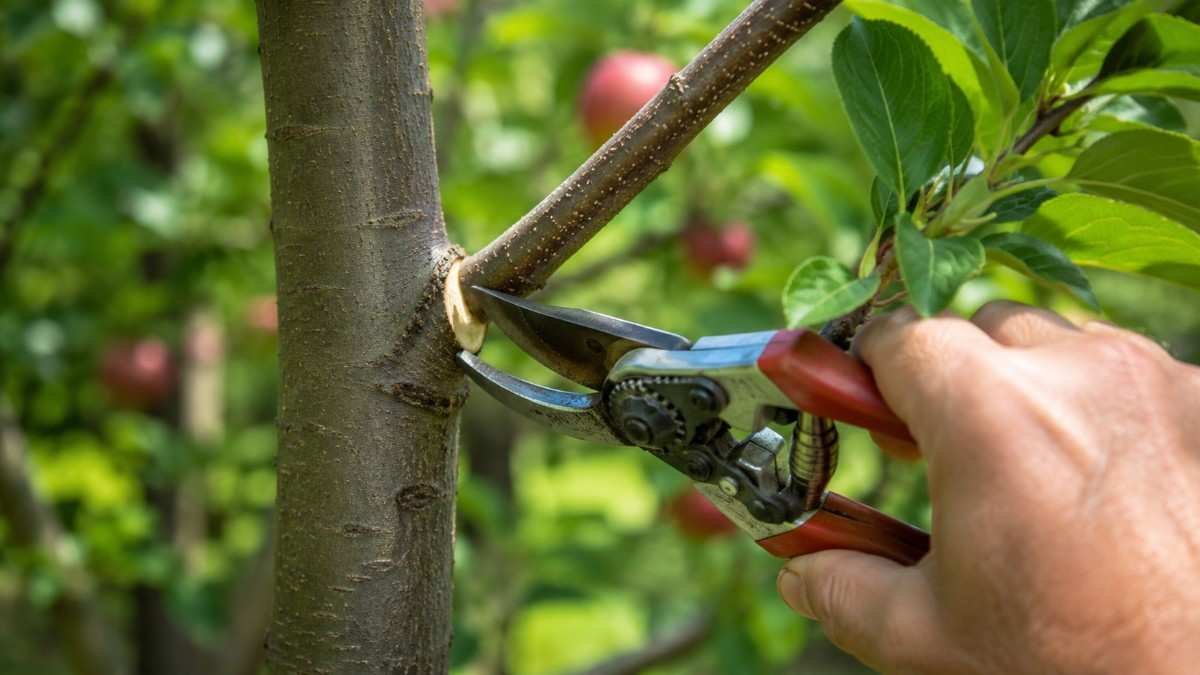
When you make a cut, always look for the branch collar. This is the swollen area at the base of the branch where it connects to the trunk. Your cut should be made just outside this collar, which allows the tree to seal the wound naturally. Never cut flush against the trunk, as this removes the tissues necessary for healing.
By the same token, do not leave a long stub, as the exposed wood will rot and can spread decay into the main trunk.
Maintaining Consistent Health
Consistent, incremental pruning is much better for a tree. Than ignoring it for years and then attempting to fix it in one go. If you remove more than twenty-five percent of a tree’s total canopy in one session, the tree will react by sending out an explosion of new vegetative growth as a survival mechanism. This creates a cycle where you are constantly fighting the tree to keep it under control.
If you find yourself managing a very old or overgrown tree, it is often better to spread the restoration process over two or three years. For those who find themselves with a complex or severely overgrown situation, professional tree care in Logan can provide the necessary guidance to bring your orchard back into balance without causing undue stress.
By prioritizing structural integrity and light penetration each year, you ensure that your tree maintains its focus on fruit production. With a steady hand and a clear plan, your trees will reward you with stronger limbs. And a more reliable, abundant harvest for many years.