
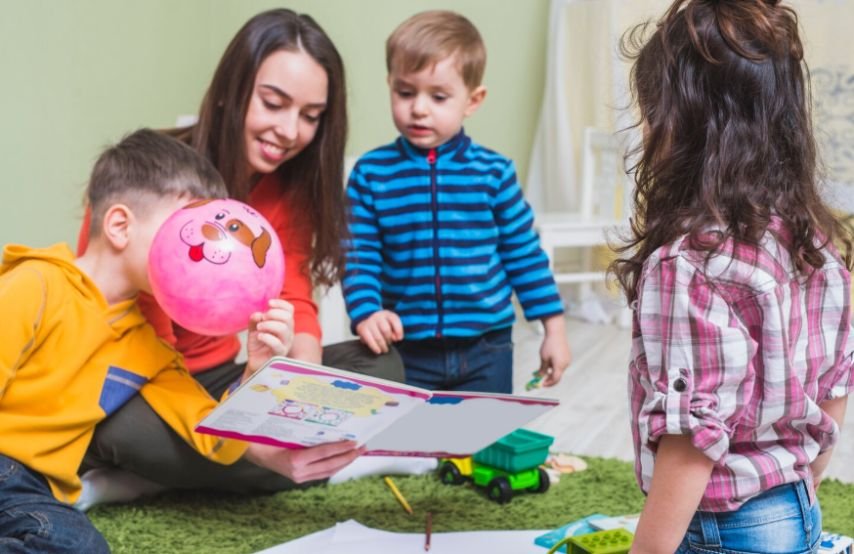
Ask most people what kids do in the year or two before kindergarten and you’ll hear something about ABCs and counting to ten. That’s part of it. But the learning happening in these early years runs far deeper than letters and numbers, and a lot of the most important skills don’t look like “school” at all.
More Than ABCs and 123s
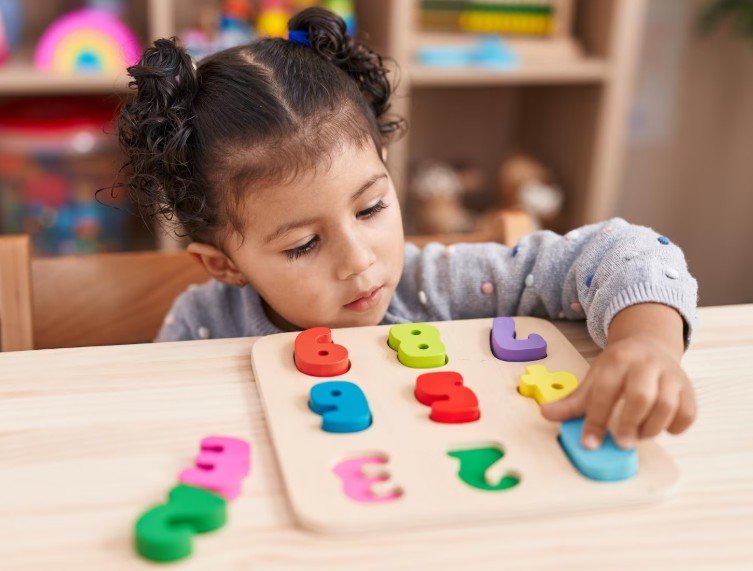
There’s a common assumption that early education is just regular academics, started sooner. It isn’t. The years before kindergarten are when kids build the foundation that all the academics will later sit on. Some of that foundation is easy to recognize, like early reading and early math.
A surprising amount of it is social, emotional, and physical. This is why understanding how little ones learn through routine and repetition can help parents see that everyday habits, repeated practice, and predictable structure are part of real school readiness. Skip those pieces, and the academic ones have nothing solid to stand on.
A surprising amount of it is social, emotional, and physical. Skip those pieces, and the academic ones have nothing solid to stand on.
The Foundations of Reading
Long before a child reads a single word, they’re quietly building the machinery for it. Strong early literacy skills in these years turn out to be one of the best predictors of how smoothly reading clicks later on.
Sounds Before Letters
Reading actually starts with the ear, not the eye. Kids learn to hear that “cat” and “hat” rhyme, that “sun” kicks off with a sss sound, that words break into beats you can clap out loud. This is called phonological awareness, and it’s the groundwork that makes sounding out words possible down the road.
Songs, rhymes, and goofy wordplay aren’t filler between the real activities. They’re literacy training in disguise.
A Growing Vocabulary
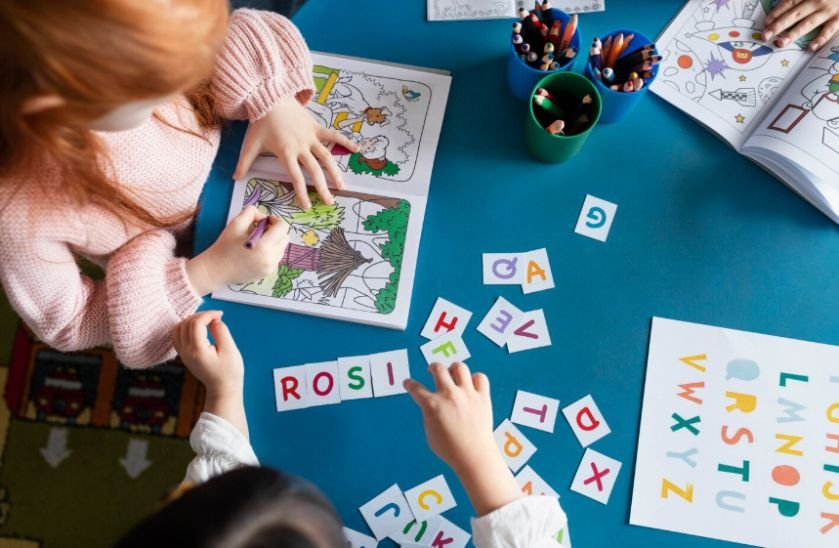
The more words a child hears and uses, the easier reading gets, because you can’t read a word you’ve never met. Conversation, being read to, naming things out loud, all of it stocks the shelves. A rich vocabulary in early childhood gives kids a head start that tends to compound year after year.
There’s another quiet piece at work here, too: print awareness. Long before they can decode text, kids start to notice that print carries meaning, that we read left to right, that those squiggles on the page are the words being said out loud.
Pointing to the words as you read, letting them turn the pages, talking about the cover, all of it teaches how books work before a single letter gets sounded out.
The Roots of Math
Early math isn’t worksheets either. It’s noticing there are more apples in this bowl than that one, lining up blocks from biggest to smallest, spotting the pattern in a string of beads.
Those moments build number sense, the gut-level feel for quantity and order that real math grows out of. These early counting, sorting, and comparison habits can also support financial literacy for kids later, because children first need to understand value, quantity, choice, and simple decision-making before money lessons make sense.
Those moments build number sense, the gut-level feel for quantity and order that real math grows out of. A kid who can sort, compare, and recognize patterns is already doing the early math that rote counting alone never touches.
The Skills That Don’t Show Up on a Worksheet
Here’s where a lot of parents are caught off guard. Some of the most important learning before kindergarten is emotional and social, and it counts every bit as much as the academic stuff.
Managing Big Emotions
A four-year-old who can take a breath instead of melting down, waiting for a turn, or bouncing back from a letdown is building self-regulation, and that skill predicts classroom success better than knowing letters does.
Strong social-emotional development is what lets a child sit in a group, ride out frustration, and stay open to learning when things get hard.
Getting Along With Others
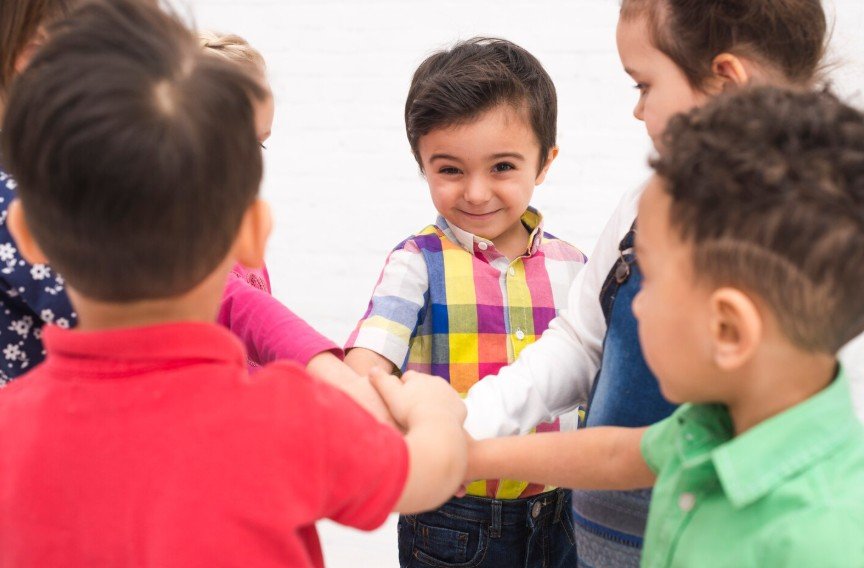
Sharing, taking turns, reading a friend’s face, settling a squabble without an adult swooping in to fix it. These get practiced constantly in a group setting, and they’re exactly the skills a kindergarten classroom runs on all day. A child who can cooperate walks into school ready to actually be part of it.
Little Hands Getting Ready to Write
Before a child can write, their hands have to be ready for the job. Cutting with scissors, threading beads, building with little blocks, squeezing playdough, all of it builds the fine motor skills and hand strength that gripping a pencil later will demand. It looks like crafting. It’s preparation.
The bigger movements matter just as much. Running, climbing, balancing, and throwing build the gross motor skills and core strength that let a child sit upright at a table, hold a steady posture, and stay focused instead of fighting their own body all day. Strong, coordinated kids find it easier to settle into the work of a classroom.
Learning How to Learn
Maybe the most underrated thing kids develop in these years is how to be a learner in the first place. Following a two-step direction. Sticking with a puzzle that’s getting frustrating. Asking “why” for the hundredth time. Cleaning up and shifting to the next thing without a battle.
These habits shape whether a child eventually meets school as something to dig into or something to endure.
What a Quality Program Focuses On
This is the lens worth bringing when you tour a quality preschool in Sandy. A strong program won’t just wave a stack of flashcards and a wall of worksheets at you.
It’ll show you a play-based curriculum that covers all of this at once: literacy through stories and songs, math through sorting and building, social skills through group play, motor skills through art and movement. Ask the staff how they support social-emotional development, not only letters and numbers.
A licensed early learning program staffed by experienced early childhood educators should be able to walk you through how each part of the day builds a different piece of school readiness. If the answer amounts to “we get them ready for kindergarten in every way, not just academically,” you’re in a good place.
Conclusion
The year before kindergarten is about far more than memorizing the alphabet; it’s where kids quietly assemble the reading, math, social, emotional, and physical foundations that everything else will rest on. Look for a setting that treats all of those as the real curriculum, and you’ll be handing your child a head start that lasts long past the first day of school.